

Why do I wake up with neck pain every morning? If you’ve ever asked yourself that question after waking up stiff, sore, or unable to comfortably turn your head, you’re not alone. Millions of people experience morning neck discomfort, often without realizing that their sleep position, pillow support, and nighttime habits may be contributing factors.
Not sure what’s causing your morning neck pain?
Take our free Sleep Assessment Quiz to discover which sleep habits may be affecting your comfort and sleep quality.
It’s 6:30 AM. Your alarm goes off, and before you even open your eyes, you already feel it.
There is that familiar, sharp twinge at the base of your skull. Or perhaps for you, it’s a dull, heavy ache radiating across your shoulders, making the simple act of reaching for your phone feel like a grueling chore. You try to turn your head to check the time, but your neck feels rigid—almost as if it’s locked in place.
You are officially “stuck.”
If you’ve ever muttered, “I think I just slept wrong,” you aren’t alone. Millions of Americans wake up every day feeling like they spent the night in a cramped middle seat on a cross-country flight rather than in their own beds. It is a frustrating, exhausting way to start the morning.
But why does a bed—a place designed for ultimate comfort—sometimes feel like a source of physical stress? Why is your neck occasionally more uncomfortable after eight hours of rest than it is after a long day at the office?
Research published by the National Institutes of Health (NIH) indicates that morning neck pain is rarely just a fluke. Instead, it is often tied to how our unique anatomy interacts with our sleep environment. To find relief, we have to look at the subtle “mechanical stress” that occurs while we’re drifting off.
The “Garden Hose” Analogy: Understanding Alignment
To visualize why you might feel stiff in the morning, it helps to use a classic analogy: the garden hose.
When a hose is laid out in its natural, gentle curves, water flows through it without resistance. However, if you put a sharp kink in that hose and leave it there for several hours, the material becomes strained and the flow is restricted.
While your spine is far more complex than hardware store plastic, the principle of mechanical stress is remarkably similar. Your neck—the cervical spine—is a highly mobile and delicate structure. It houses a sophisticated network of nerves and blood vessels that are sensitive to prolonged pressure or awkward positioning.
The Goal of Neutral Alignment
When you are standing with what physical therapists call “neutral posture,” your head is centered directly over your shoulders. In this position, the bones and ligaments of your spine support the weight of your head—which weighs about 10 to 12 pounds—with minimal effort from the surrounding muscles.
The challenge begins the moment we lie down.
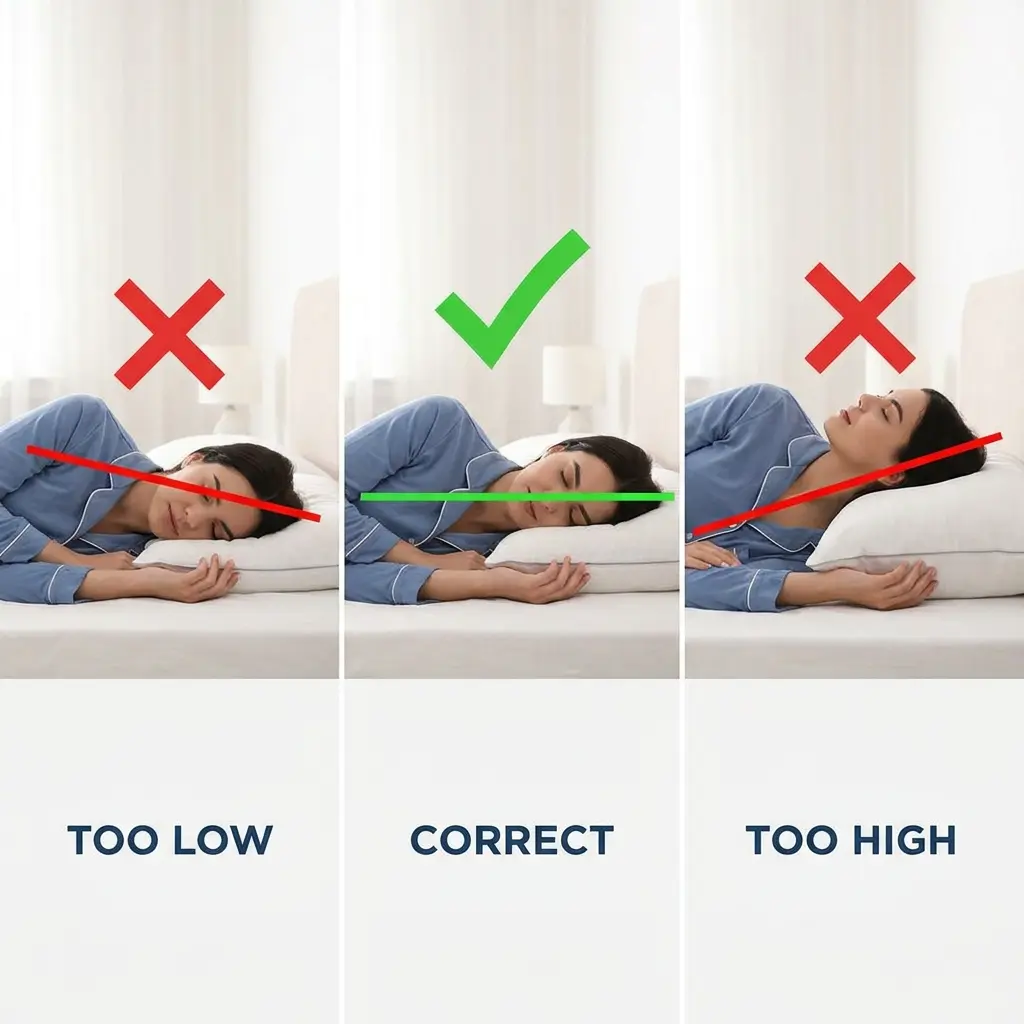
If your pillow is too high, it forces your head to tilt upward. If it’s too low, your head may hang down toward the mattress. Research published in the journal Healthcare suggests these positions can misalign the cervical spine. You might not feel the strain at 11:00 PM when you’re exhausted, but by 3:00 AM, your muscles may begin to seize up to protect the nerves and joints from the constant pressure. By the time you wake up, this protective tension manifests as the pain or stiffness you feel.
Why Do I Wake Up With Neck Pain? 3 Common Factors
Understanding why you wake up in pain usually starts with identifying your specific “sleep style.” Research published by the National Institutes of Health (NIH) suggest these three factors are most frequently linked to morning neck discomfort.
1. Sleep Position and “The Twist”
While we all have a preferred way to fall asleep, certain positions put significantly more strain on the cervical spine than others.
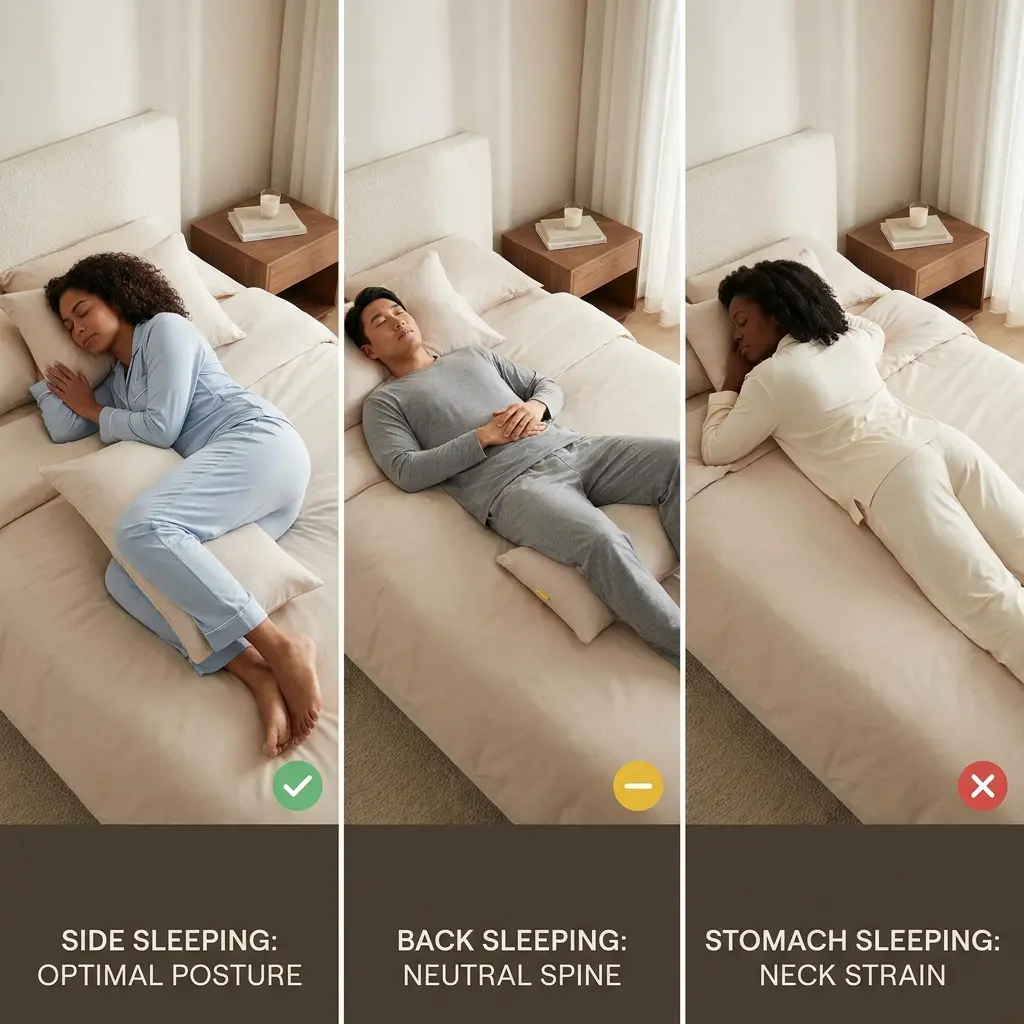
For example, stomach sleeping is often cited by experts as a major contributor to chronic neck strain. To breathe in this position, you must turn your head nearly 90 degrees to one side. Imagine standing in your kitchen with your head turned completely to the right for eight hours. Most of us would feel significant discomfort within minutes.
Research suggests that this constant twisting can strain the muscles on one side of the neck while compressing the joints on the other. If you notice that your pain is consistently worse on one specific side, your habit of sleeping on your stomach may be the main culprit.
2. The “Shoulder Gap” and Support (For Side Sleepers)
Side sleeping is the most common position for American adults. While it’s generally considered a healthy way to sleep, it requires the right equipment to maintain proper alignment.
When you lie on your side, there is a physical gap between your ear and the mattress—essentially the width of your shoulder. If your pillow is too soft or too thin, it fails to fill this space, causing your head to tilt down toward the bed.
This position puts constant tension on the muscles of the neck and upper back. A systematic review published in Healthcare found that even a minor misalignment of just a few inches, when held for several hours, can strain soft tissues and cause that heavy, “weighted” feeling in your shoulders upon waking.
3. Muscle Tension and the Nervous System
Sometimes the cause of morning pain isn’t just the pillow—it’s what your body is doing *on* the pillow.
There is a growing body of evidence suggesting a strong link between our nervous system and muscle tension. When we experience high stress levels during the day, our bodies may remain in a state of “high alert” (the sympathetic nervous system) even after we fall asleep. This can lead to “involuntary muscle guarding,” where the neck and shoulder muscles stay slightly contracted rather than fully relaxing.
This tension is often paired with “bruxism,” or jaw clenching. Because the muscles of the jaw and neck are closely linked, clenching your teeth at night can contribute to a cycle of stiffness felt at the base of the skull the next morning.
Poor sleep doesn’t only affect muscle recovery.
Many people who experience nighttime tension also report waking up feeling tired, unrefreshed, or low on energy despite spending enough time in bed.
If that sounds familiar, you may also find our guide on why some people wake up tired even after sleeping all night helpful.
Everyone sleeps differently.
Your pillow, sleep position, stress levels, and nightly habits all play a role.
Many people spend years trying different pillows without ever identifying what may actually be contributing to their morning neck discomfort.
The Sleep Assessment can help you explore habits, sleep positions, and comfort factors that may be affecting your sleep.
What does the research say? (The pillow evidence)
The idea that “any pillow will do” is not supported by modern sleep science. Researchers have conducted clinical studies to determine how pillow design affects waking symptoms.
Why Firmness and Shape Matter
A systematic review published in the journal Clinical Biomechanics examined how different pillow materials affect neck pain. The research suggests that traditional pillows, filled with feathers or simple polyester fiberfill, often shift during the night. As the material moves away from the neck, support disappears and the head sinks into a misaligned position.
The Role of Material and Contour
Evidence suggests that “shape-memory” materials—like high-quality memory foam or latex—can be more effective at maintaining cervical alignment. These materials are designed to contour to the unique shape of your head and neck without collapsing under pressure.
Furthermore, “orthopedic” or contour pillows—which feature a raised edge for the neck and a recessed center for the head—have been linked in some studies to a significant reduction in morning neck pain. These designs aim to support the natural curve of the neck, helping the spine stay neutral throughout the night.
Self-alignment check in 30 seconds
You don’t necessarily need a sleep lab to see if your posture is the problem. You can perform a simple observation at home tonight to get a better sense of your alignment.
How to perform the verification:
1. Place your pillow on the bed and lie down in your usual sleeping position.
2. If possible, have a family member or friend take a photo of your face and neck from a straight-on angle.
3.Look at the photo: Imagine a line that goes from the center of your forehead, past your nose, to the center of your chest.
What to look for: Is this line relatively straight? Or is your head significantly tilted towards the mattress or resting on the ceiling? If the line is curved, it may indicate that the height of your pillow is not suitable for the width of your shoulders or your sleeping position.
If you sleep on your back, check your chin angle. If your chin is tucked toward your chest, the pillow is too high. If your chin is pointing straight at the ceiling, the pillow is too low. Both extremes can contribute to muscle strain and poor sleep quality.
Practical tips for relief
While chronic pain should always be discussed with a healthcare professional, there are several practical adjustments that research and clinical practice suggest can help improve sleep posture.
The “Cervical Roll” Option
If you find your pillow is too flat, you can try adding targeted support without buying something new immediately. Roll a small hand towel into a firm cylinder and tuck it inside your pillowcase—positioned specifically under the curve of your neck—to provide extra lift. This “cervical roll” can help maintain the natural curve of the spine for back sleepers.
Transitioning Away from Stomach Sleeping
For those who suspect stomach sleeping is the cause of their pain, transition props can be helpful. Using a long body pillow can provide the sensory comfort and “hugging” sensation of stomach sleeping while making it physically more difficult to turn completely onto your belly. This helps keep the neck in a more neutral position.
The Bedtime “Reset”
Since stress impacts muscle tension, a brief wind-down routine can be beneficial. Simple techniques like slow diaphragmatic breathing (deep belly breaths) have been shown to help the nervous system shift from “stress” mode to “rest” mode. Consciously relaxing your shoulders away from your ears before you drift off can help reduce nocturnal muscle guarding.
Frequently Asked Questions
Why does my neck pain sometimes cause a morning headache?
Morning headaches can sometimes be “cervicogenic,” meaning they originate in the neck. Studies suggest that when the muscles or joints of the upper cervical spine are strained, pain can be referred to the head, often manifesting as a dull ache or pressure behind the eyes or at the temples.
Can a bad mattress cause neck pain?
Yes. A mattress that has lost its structural integrity can cause the heaviest parts of your body—like your hips—to sink too deep. When the lower spine is out of alignment, the upper spine often compensates, which can shift your neck’s position on the pillow.
How long does it take to adjust to a new sleep position?
If you are changing your sleep position or using a new type of pillow, it can take your body a few nights to adjust. It is common to feel a different kind of mild “adjustment” soreness for the first few nights as your muscles and joints learn to rest in a new posture.
Next Steps for Better Rest

Waking up with a stiff neck isn’t something you simply have to accept as part of getting older. As we’ve seen, morning discomfort is usually the result of the interaction between our sleep habits, our physical environment, and our nervous system’s behavior during the night.
By becoming more aware of your postural alignment and the support your body needs, you can start making informed choices that lead to more restful, pain-free mornings.
Sleep quality is often connected to more than just neck comfort.
Some people notice morning fatigue, dry mouth, frequent awakenings, or difficulty feeling refreshed even after sleeping for a full night.
If you’ve experienced those symptoms, you may also enjoy our guide on why people wake up tired even after sleeping all night.
However, because everyone’s body is unique, there is no one-size-fits-all solution. The perfect pillow for a broad-shouldered side sleeper might be completely different from the best option for a back sleeper. Understanding your own “sleep profile” is the first step toward finding a solution that works for you.
Curious to find out what might be standing between you and a restorative night’s sleep? Analyzing your individual habits can provide valuable insight into your morning symptoms.
What to Remember:
- Neck pain is often related to sleep posture.
- Pillow height matters more than most people realize.
- Stomach sleeping may increase cervical strain.
- Stress can contribute to overnight muscle tension.
- Understanding your sleep habits is the first step toward better rest.
Ready to learn what may be affecting your sleep?
If you regularly wake up with neck stiffness or discomfort, small details in your sleep setup may be playing a bigger role than you realize.
Take the free Sleep Assessment and discover factors that may be affecting your comfort and sleep quality.
It only takes a few minutes.
Sources
This article was created using information from peer-reviewed scientific studies and reputable health organizations.
• Healthcare Journal – Systematic Review on Pillow Design and Neck Pain
• National Institutes of Health (NIH) – Sleep, Stress, and Chronic Pain
• Sleep Foundation – Best Sleeping Positions for Neck Pain
• Healthcare Journal – Sleep Posture and Neck Pain Research
Enjoyed this article?
If you found this guide helpful, consider sharing it with someone who may also benefit from healthier sleep habits.