The alarm clock rings, casting a dull glow across the room. You reach out to silence it, but as you lift your head from the pillow, you feel it—a familiar, rhythmic throb behind your temples or a heavy, dull ache at the base of your skull. You’ve spent the last eight hours in bed, yet instead of feeling refreshed, you feel as though you’ve just finished a marathon or spent the night tensing every muscle in your body.
For many, this is a daily reality. The morning headache is a thief of time; it steals the quiet peace of a morning coffee, clouds your focus during early meetings, and leaves you wondering why “rest” feels so exhausting.
While many people immediately reach for a glass of water, assuming dehydration is the culprit, or blame the stress of the upcoming day, the answer may be far more foundational. Often, the cause of morning discomfort isn’t just about how long we sleep, but how we sleep—the mechanics of our bodies, the alignment of our spines, and the subtle ways our environment influences our breathing and muscle tension throughout the night.
In this article, we will explore the often-overlooked factors that may contribute to morning headaches, from the way your neck rests on the mattress to the hidden connection between breathing patterns and head pressure.
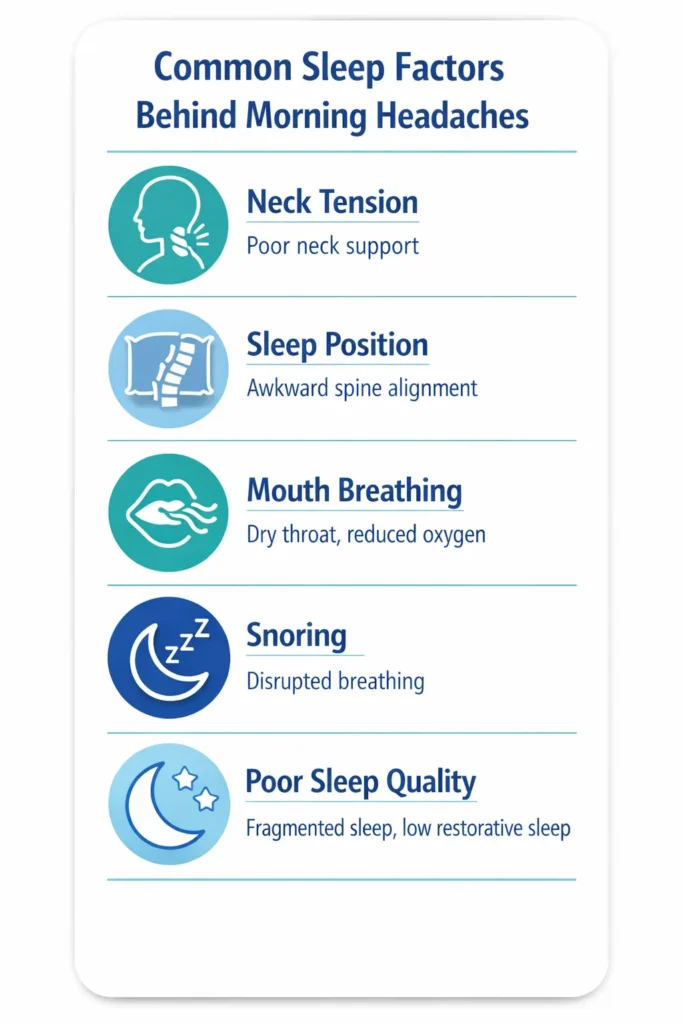
Even when people spend seven or eight hours in bed, poor sleep quality caused by repeated micro-awakenings can leave them feeling exhausted the next morning. In some cases, the problem isn’t the amount of sleep, but how restorative that sleep actually is.
A headache isn’t just a physical sensation; it’s an emotional and cognitive burden. When you wake up with head pain, it sets a specific tone for the next twelve to sixteen hours. It’s frustrating because it feels like a “debilitating start” to a day that hasn’t even begun.
Beyond the pain itself, morning headaches often bring a sense of “brain fog.” You might find yourself re-reading the same email three times or feeling uncharacteristically irritable with family members. This happens because the body’s transition from sleep to wakefulness—a complex process involving shifts in blood pressure and neurochemistry—is being interrupted by a pain signal. Furthermore, there is the frustration of the unknown.
Unlike a headache that develops after a long day at a computer, a morning headache feels “unearned.” You were supposed to be recovering. This lack of clear cause often leads to a cycle of worry, which can, ironically, create more muscle tension and exacerbate the very problem you’re trying to solve.
The Hidden Connection Between Sleep and Morning Headaches
To understand why your head might ache at 7:00 AM, we have to look at what happens to the body during the night. Sleep is not a static state; it is a highly active period of biological maintenance. However, for this maintenance to be successful, the physical “machinery” of the body needs to be in a neutral, relaxed position.
The Mechanics of the Head and Neck
The human head weighs, on average, between 10 and 12 pounds. When you are upright, your cervical spine (the neck) is designed to support this weight with minimal effort, provided your posture is aligned. However, when you lie down, the responsibility of supporting that weight shifts.
If the head is tilted at an awkward angle for several hours, the muscles in the neck and upper back must work to stabilize the area. Even though you are “asleep,” these muscles may remain in a state of micro-tension.
This sustained contraction can restrict blood flow and irritate the nerves that lead into the scalp, which may manifest as a dull, pressing headache upon waking.
The Role of Breathing
Another hidden factor is how we breathe while we sleep. The quality of our airflow can influence the oxygen levels in our blood and the pressure within our circulatory system. If the airway is slightly compromised—perhaps due to head position or nasal congestion—it can lead to subtle shifts in carbon dioxide levels.
This may cause blood vessels in the brain to dilate (widen), a process that is often associated with a “heavy” or “throbbing” sensation in the morning.
How Neck Tension May Contribute to Morning Headaches
When we talk about morning headaches, we are often actually talking about the neck. This is sometimes referred to in clinical circles as a “cervicogenic” influence—meaning the pain originates in the cervical spine but is felt in the head.
The “Anatomy of Tension”
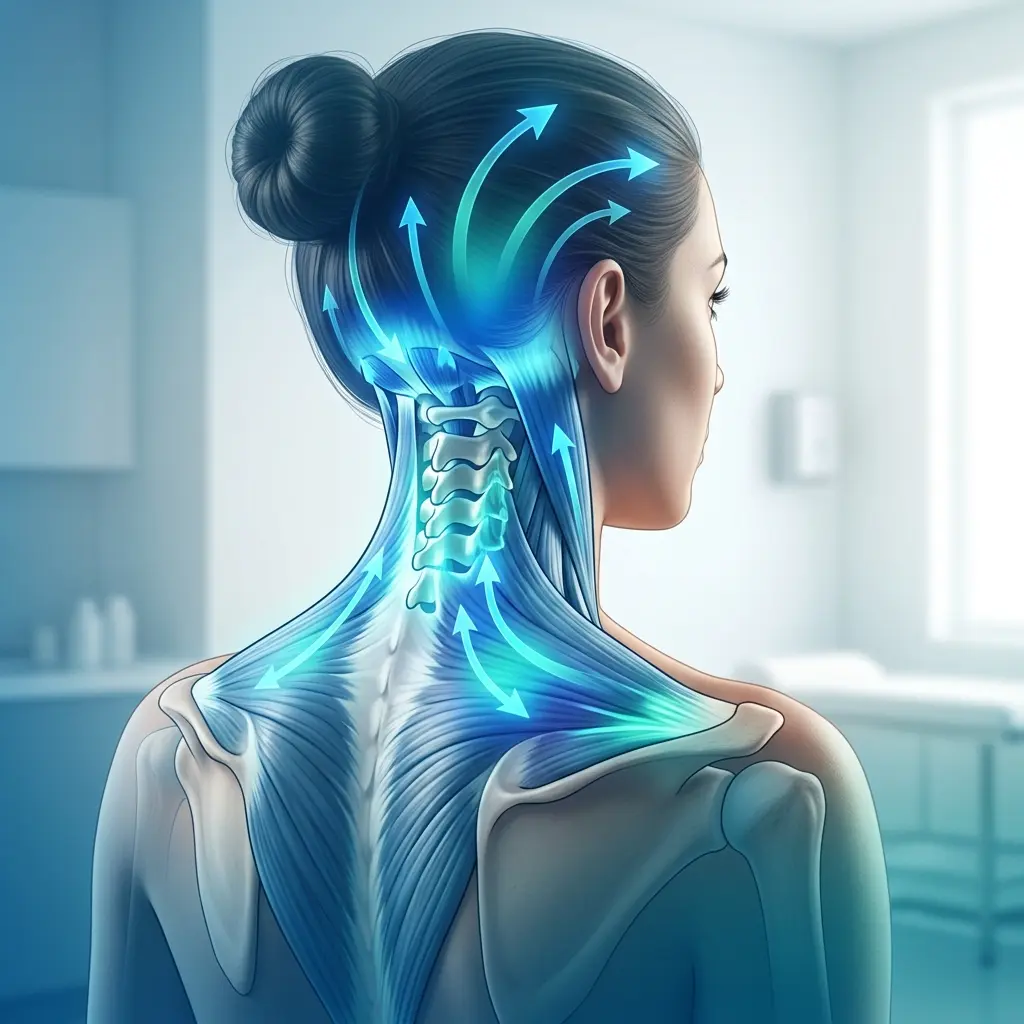
Think of your neck as a bridge between your brain and your body. This bridge is packed with delicate structures: vertebrae, discs, nerves, and a complex web of small muscles.
Suboccipital Muscles: These are small muscles at the very top of your neck, right where the skull meets the spine. If your head is pushed too far forward or tilted back during sleep, these muscles can cramp. Because these muscles are closely linked to the nerves that wrap around the side of your head, tension here often feels like a “band” tightening around your forehead. Morning headaches are often accompanied by neck stiffness, shoulder discomfort, or even arm numbness, especially when sleeping posture places prolonged stress on the cervical spine.
The Trapezius: This large muscle extends from the base of your skull, across your shoulders, and down your back. If your shoulders are “hunched” toward your ears while you sleep—often a result of being cold or feeling stressed—this tension can radiate upward, resulting in a morning headache accompanied by shoulder stiffness.
Simple Analogies
Imagine holding a 10-pound bowling ball. If you hold it close to your chest, it feels manageable. If you hold it at arm’s length, your muscles will quickly begin to shake and ache. Sleep posture works similarly. If your head is “out of line” with your spine, your neck muscles are essentially “holding the bowling ball at arm’s length” all night long.
Could Your Sleeping Position Be Part of the Problem?
We all have a favorite way to drift off, but our “comfort” position might not actually be the most “supportive” position. How you orient your body determines which muscles are under strain and which are at rest.
Did You Know?The "Micro-Awakening" Factor:
Many people who wake up with headaches actually experience hundreds of "micro-awakenings" during the night. These are moments where you almost wake up—perhaps to adjust an uncomfortable neck position or because your breathing was slightly restricted—but you don't remember them. These interruptions prevent you from reaching the deep, restorative stages of sleep where tissue repair and muscle relaxation occur.
Even when people spend seven or eight hours in bed, poor sleep quality caused by repeated micro-awakenings can leave them feeling exhausted the next morning. In some cases, the problem isn't the amount of sleep, but how restorative that sleep actually is.
Side Sleeping: The Most Common Choice
Side sleeping is generally considered a healthy position as it can help keep airways open and may reduce the likelihood of snoring. However, it requires a very specific balance.
The Challenge: If your head is too low, your neck bends toward the mattress. If it’s too high, it bends toward the ceiling. In both cases, one side of your neck is being stretched while the other is being compressed.
The Result: This imbalance may lead to “one-sided” headaches or a stiff neck that makes it hard to turn your head to check your blind spot while driving in the morning.
Back Sleeping: The Neutral Ideal?
Sleeping on your back is often cited as the best position for spinal alignment because it allows the weight of the head to be distributed evenly.
The Challenge: Gravity. For some, back sleeping causes the tongue to relax toward the back of the throat, which may narrow the airway. This can lead to snoring or “shallow breathing,” both of which are linked to morning grogginess and headaches.
The Result: A “full” or “congested” feeling in the head upon waking.
Stomach Sleeping: The High-Risk Position
Most sleep experts suggest that stomach sleeping is the most taxing on the body.
The Challenge: You cannot breathe through your pillow, so you must turn your head to the left or right. Holding your neck at a 90-degree angle for hours on end puts immense pressure on the joints of the cervical spine and the surrounding musculature.
The Result: Frequent morning headaches, jaw tension, and a high likelihood of waking up with “pins and needles” in the arms.
Many people assume nighttime numbness is always caused by poor circulation.
However, sleep posture, shoulder pressure, and head-to-neck alignment may also influence how comfortable your arms and hands feel during the night.
That’s one reason why paying attention to sleep mechanics can sometimes reveal patterns that would otherwise go unnoticed.
Signs Your Sleep Setup May Be Affecting Your Comfort
Sometimes, the body provides clues that the headache is related to the sleep environment rather than a deeper medical issue. If you recognize several items on this checklist, it may be time to evaluate your sleep mechanics.
Quick Morning Headache Checklist
Waking with headaches: The pain is present the moment you open your eyes but often begins to fade after you’ve been upright and moving for 30 to 60 minutes.
Neck stiffness: You find yourself needing to “stretch out” your neck or shoulders as soon as you get out of bed.
Shoulder tension: Your shoulders feel “hiked” or tight, as if you’ve been carrying a heavy backpack.
Feeling unrested: Despite “sleeping” for 7 or 8 hours, you wake up feeling like you didn’t actually rest.
Frequent position changes: You wake up with your blankets in a heap, suggesting you spent the night tossing and turning to find a comfortable angle for your head.
Many people assume nighttime numbness is always caused by poor circulation.
However, sleep posture, shoulder pressure, and head-to-neck alignment may also influence how comfortable your arms and hands feel during the night.
That’s one reason why paying attention to sleep mechanics can sometimes reveal patterns that would otherwise go unnoticed.
Simple Sleep Adjustments That May Help
Improving your morning experience often involves small, incremental changes to how you set the stage for sleep.
Focus on Head Alignment
The goal is “neutral alignment.” This means that if someone were to look at you from the side while you were lying down, your ear, shoulder, and hip should form a relatively straight line. Avoid using multiple pillows that prop your head up at a sharp angle, as this can strain the back of the neck.
Consider Neck Support
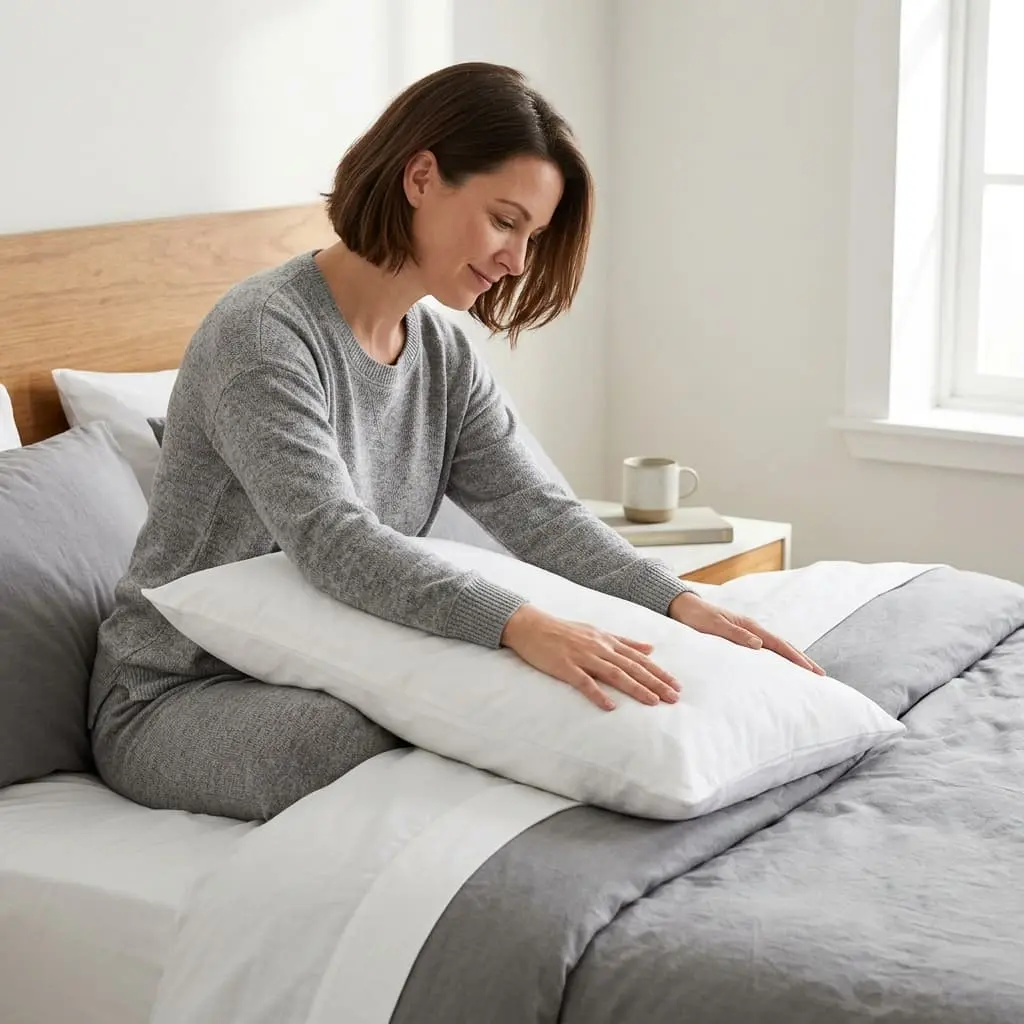
The gap between your ear and the mattress (for side sleepers) or the curve of your neck and the mattress (for back sleepers) needs to be filled. Ensuring this “hollow” space is supported allows the muscles to finally let go and stop “guarding” the spine.
Side Sleeping Considerations
If you sleep on your side, placing a small pillow between your knees can help keep your hips level, which in turn prevents your spine from twisting. A twisted spine can pull on the muscles of the upper back, indirectly contributing to neck tension.
Evaluate Your Bedroom Environment
Temperature: A room that is too cold may cause you to subconsciously hunch your shoulders or curl into a tight ball, increasing muscle tension.
Light: Even small amounts of light can interfere with the depth of your sleep cycles. Thinner sleep often leads to more tossing and turning, which disrupts physical alignment.
Sleep Routine Consistency
Going to bed and waking up at the same time helps regulate the body’s natural inflammatory markers and blood pressure fluctuations. A body that follows a rhythm is often a body that experiences less “startup pain” in the morning.
Frequently Asked Questions
1. Can dehydration really cause a morning headache? Yes, it can. During the night, we lose moisture through breathing and perspiration. If you start the night dehydrated, your brain volume can subtly shrink, pulling slightly away from the skull and causing a headache. However, if your headache is accompanied by neck stiffness, the cause is more likely mechanical (posture-related) than just hydration-based.
2. Why does my headache go away shortly after I get up? This is a classic sign of a “postural” headache. When you stand up, gravity changes the way weight is distributed on your spine, and blood flow patterns shift. Movement also helps “flush out” the lactic acid and tension that built up in the neck muscles during the night.
3. Is it better to sleep without a pillow if I have neck pain? For most people, sleeping without a pillow is not recommended, especially for side sleepers, as it leaves the neck completely unsupported. However, very thin pillows can sometimes benefit back sleepers who have a naturally flat spinal curve. It’s about matching the support to your unique anatomy.
4. Can stress from the previous day cause a headache the next morning? Absolutely. We often “carry” the day’s stress in our jaw (clenching) and our shoulders. If you go to bed with “high” shoulders or a tight jaw, those muscles won’t magically relax just because you’re unconscious. They may stay tense all night, leading to a morning headache.
5. How do I know if my headache is from my neck or something else? If the pain feels like it’s “creeping” up from the base of your skull, or if it feels like a tight band around your head, it may be tension-related. If the pain is accompanied by a “clicking” sound in your neck when you move, that is another sign that sleep posture may be playing a role.
Looking Beyond the Headache
Waking up with a headache is a signal from your body—a request for attention to the hours you spend in the dark. While it is easy to dismiss these aches as an inevitable part of aging or a busy lifestyle, they are often the result of subtle physical stressors that we have the power to influence.
By paying closer attention to your sleeping position, ensuring your neck is properly supported, and creating a sleep environment that encourages relaxation rather than tension, you can begin to reclaim your mornings. Sleep should be a sanctuary, a time when the body heals and the mind clears. If you find yourself waking up in pain, take a moment to look at your “setup.” Sometimes, the path to a clear, pain-free morning is as simple as finding a better way to support the “bridge” between your body and your mind.
Every sleeper is different.
What causes morning headaches for one person may not be the same for someone else.
Understanding your sleep posture, breathing habits, and comfort patterns is often the first step toward better mornings.
Take our free Sleep Assessment and discover what your sleep habits may be revealing.
Alignment is Key: Morning headaches are frequently associated with the “neutrality” of your spine. Keeping your ear, shoulder, and hip aligned can reduce muscle strain.
The Neck-Head Connection: Muscles at the base of the skull (suboccipitals) are often the primary source of morning head pain when they are compressed or stretched overnight.
Stomach Sleeping is Taxing: Turning the head 90 degrees to breathe while on your stomach is a major contributor to cervical tension.
Check the “Hollows”: Ensure the space between your neck and the mattress is comfortably filled to allow muscles to relax.
Breathing Matters: Headaches can sometimes be influenced by airway comfort; a clear, unobstructed breathing path is essential for “clear-headed” mornings.
Listen to the Signs: Morning stiffness and feeling unrested are your body’s way of asking for a change in your sleep environment or habits.
Sources
This article was created using information from peer-reviewed scientific studies and reputable health organizations.
• Sleep Foundation – Sleep Position, Sleep Posture and Sleep Quality
• Cleveland Clinic – Causes of Morning Headaches, Neck Tension and Sleep-Related Discomfort
• National Institutes of Health – Sleep Quality, Sleep Disorders and Morning Headache Research
• Mayo Clinic – Headache Triggers, Sleep Habits and Lifestyle Factors
• Research on Cervical Spine Alignment, Sleep Posture and Musculoskeletal Health
• Research on Breathing Patterns, Airway Comfort and Sleep-Related Headaches
Enjoyed this article?
If you found this guide helpful, consider sharing it with someone who may also benefit from healthier sleep habits.
Manage Consent
To provide the best experiences, we use technologies like cookies to store and/or access device information. Consenting to these technologies will allow us to process data such as browsing behavior or unique IDs on this site. Not consenting or withdrawing consent, may adversely affect certain features and functions.
Functional
Always active
The technical storage or access is strictly necessary for the legitimate purpose of enabling the use of a specific service explicitly requested by the subscriber or user, or for the sole purpose of carrying out the transmission of a communication over an electronic communications network.
Preferências
O armazenamento ou acesso técnico é necessário para o objetivo legítimo de armazenar preferências que não são solicitadas pelo assinante ou usuário.
Statistics
The technical storage or access that is used exclusively for statistical purposes.O armazenamento ou acesso técnico que é usado exclusivamente para fins de estatísticas anônimas. Sem uma intimação, conformidade voluntária do seu provedor de serviços de internet ou registros adicionais de terceiros, as informações armazenadas ou coletadas apenas com esse objetivo geralmente não podem ser usadas para identificar você.
Marketing
The technical storage or access is required to create user profiles to send advertising, or to track the user on a website or across several websites for similar marketing purposes.